Is copyright a good or bad thing? Why? I'm curious to hear your thoughts.
hello_hello [comrade/them] - 4day
There's a good article on the GNU project website that talks about copyright: https://www.gnu.org/philosophy/misinterpreting-copyright.en.html though there are many other writings on copyright from a socialist perspective. (disclaimer, author is a bernie bro libertarian)
Essentially copyright acts as a mechanism for the bourgeois classes (publishers, media conglomerates, large firms) to siphon and hoard works for themselves. Initially the system was germane but as patent and publisher lobbying groups grew under capitalism, the system of copyright, patent and trademark law all were lobbied to favor publishers more highly than both authors and readers (the infamous "Mickey Mouse" law was used to extend copyright past a regular human's average lifespan, essentially enshrining artistic works as permanent private property.
In a socialist society, copyright would be essentially done with as its main purpose was to "protect" (big air quotes here) the profits of publishers. If every author and artist had a guaranteed salary and training, copyright would not be needed. Note that copyright is explicitly not the same as attribution. A sad example of this is how many manga artists in Japan (a global north country that is infamous for draconian copyright enforcement) actually don't hold the copyright to their works. For example, the creator of One Piece (a series which grossed hundreds of billions of dollars in its 2+ decade span) doesn't actually "own" One Piece, Shueisha, the publisher, does. The mangaka is simply an employee hired by the publisher to produce authorized content of said series.
Today we have what we call "copyleft" licenses which were coined by Richard Stallman back in the late 80s which use copyright laws and flips them on its head, allowing for the work to be collectively owned. The GNU General Public License and Creative Commons licenses are both examples of copyleft licenses.
19
Nocturnelle [they/them] - 4day
Please note that many other asshole things would still be very bad and asshole-ish, even if there were no copyright laws. For example, if I printed Pokémon Trading Cards and claimed that the Pokémon Company printed them, it would definitely be fraud and deception.
We can also punish a lack of citations or attribution through culture without turning it into a criminal penalty.
It might sound weird, but copyright might not benefit a lot of big companies as much as you think in all circumstances. If a Twitch streamer plays a copyrighted song on Twitch and it gets muted in the VOD, does it really directly benefit the label? Not really, they're losing an opportunity for free advertising. Don't forget that music and information are not scarce; if I listen to a piece of music on my hard drive, it doesn't prevent you from listening to the same music on your computer.
The "legitimate intent" of copyright, increasing the odds that original artists get paid, can be achieved without copyright laws, whether in a capitalist or socialist economy.
For example, in a capitalist context, artists could rely more heavily on direct patronage, live performances, commissions, or crowdfunding models that already thrive today despite and sometimes because of the limitations of traditional copyright enforcement. Platforms like Patreon, Bandcamp, or Substack show that audiences are often willing to support creators voluntarily when they feel a personal connection or see clear value.
In a socialist framework, creative work could be socially funded through public institutions, cooperatives, or community supported grants, ensuring artists are compensated not by artificial scarcity or legal monopolies, but by collective recognition of their contribution to culture.
Moreover, the idea that copying inherently harms creators assumes that exposure and sharing don't generate value which, in the digital age, is increasingly untrue. Viral sharing can launch careers, build fanbases, and create demand for authentic experiences that can't be copied: concerts, signed prints, behind the scenes access, or personalized interactions.
So copyright was never a fair deal. It restricted creativity, harmed sharing, and only pretended to help the public. Now, when information spreads easily and attention is what matters, it's just an outdated tool for control.
4
hello_hello [comrade/them] - 4day
If a Twitch streamer plays a copyrighted song on Twitch and it gets muted in the VOD, does it really directly benefit the label?
Content IDs feel like the prelude to do rent-extraction on users who will be made to pay a subscription for the right to stream such music. The industry is conglomerating around a few big companies and they could definitely do this to a point where there are no other alternatives besides not playing copyrighted music.
Copyright is very outdated, but also very useful to capitalists even paradoxically so.
5
Nocturnelle [they/them] - 4day
Copyright is a double-edged sword. It only "works" for them if:
Everyone is relentlessly enforcing copyright without leaving any non-copyrighted alternatives
The streamer would buy the rights to stream the music if copyright was enforced on them
Most of them aren't true and are very hard to prove.
If the dystopia you're talking about does happen for whatever reason, a lot of streamers might switch to playing no music, rely on environmental sounds like bird songs, use non-copyrighted music, or generate their own music via AI.
The only real winners with the status quo are the law firms and lawyers imo.
I have no doubt that some companies benefit from the current system in some circumstances, but it's a double-edged sword for sure.
1
Beaver [he/him] - 3day
Please note that many other asshole things would still be very bad and asshole-ish, even if there were no copyright laws. For example, if I printed Pokémon Trading Cards and claimed that the Pokémon Company printed them, it would definitely be fraud and deception.
This is an interesting case, because the Pokémon Company purposely entangles the Copyright and Trademark of it's product. For a market to work even in a no-copyright world, you do still need some trademark protections; for example, if you sell 3rd party Pokémon cards, it would have to be explicit that they are not Pokémon Company cards.
2
RaisedFistJoker [she/her] - 4day
its bad
16
Erika3sis [she/her, xe/xem] - 4day
Piracy and legal consumption of media are really two sides of the same coin under capitalism: The value of a piece of so-called "intellectual property" comes from the labor that went into it, which is Not Just the labor that went into creating the original copy, but also the labor that went into creating all subsequent copies — crucially including "illegal" copies! — as well as all fan content and all other derived works including all commentary. Copyright itself is just the use of everypony's favorite Monopoly on Legitimate Violence to create the artificial scarcity that is a prerequisite of value, both through actually shutting down so-called "copyright infringement" and by controlling the Discourse to present piracy as a bad or dangerous thing. This means that Walmart DVDs are kinda like the O'Hare Air of media: We could've had a breathable atmosphere, but we're stuck with this crap instead.
So this is why I support total copyright abolition and hear no excuses for the institution.
15
JoeByeThen [he/him, they/them] - 4day
Copyright is private property applied to the intellectual commons.
13
Nocturnelle [they/them] - 4day
It's way worse than other illegitimate forms of property.
If a corporation obtains a factory through dubious means, you can still attempt to have some very limited amount of empathy for them, because at least physical resources are limited.
With intellectual property none of this applies, ideas are not scarce. If I think of an idea, I don't prevent you from thinking the same idea. If I play a Nintendo game on my hard drive, Nintendo doesn't lose a copy of the same game on their end (you might argue it's bad that ideas aren't scarce though, and honestly, they might have deserved to lose their copy of the game)
Equating all copyright infringement to physical theft is just fallacious.
3
JoeByeThen [he/him, they/them] - 4day
Sure. Ctrl-c, ctrl-v shows how silly copyright is. It's antithetical to the entire function of computers.
4
Moonworm [any] - 4day
I don't know that there is a functional model of IP law that will not be eventually bent to serve the most powerful at the expense of everyone else. At this point I feel the whole thing needs to be thrown out and rebuilt from the ground up with great care and trepidation, if at all.
11
Le_Wokisme [they/them, undecided] - 4day
they're a tool of the bourgeoise and are net-bad for humanity, but i would like a mechanism to prevent nazis from using something i created.
7
PolandIsAStateOfMind @lemmygrad.ml - 3day
but i would like a mechanism to prevent nazis from using something i created.
3
ConcreteHalloween [none/use name] - 3day
I like to be a bit "realpolitik" about it.
The original concept made sense under a capitalist mode of production, if you are the inventor of some idea you should essentially have "dibs" on making money off it for a certain duration of time before people can just copy your work and sell it as their won. And yeah I see why that original model did benefit artists cuz it would suck if you wrote a cool novel that was selling well but then some guy CTRL+C CTRL+V'd it into another doc and changed the title and sold it for $5 less than your own copy.
But obviously it pretty quickly got abused with the length of that period of "dibs" getting extended to essentially forever and being mostly used by massive corporations to try and demand everyone pay them for fucking everything.
Ideally under FALGSC none of this shit would matter, you could just create stuff, and the only issue would be proper crediting of work since nobody would care about profit. But I guess as long as we live in a world where people get paid for shit and we'd like artists to get paid sometimes having some better version of copyright exist may be good.
6
FALGSConaut [comrade/them] - 4day
I generally don't think about them
6
BigWeed [none/use name] - 4day
The idea that you can invent or create something and then reap the rewards for it to create stable employment for yourself is no longer a thing that exists. Anything valuable that you create as an individual will be either copied or straight up stolen by a better capitalized firm.
5
Beaver [he/him] - 3day
"Intellectual Property" is a lobotomy on civilizational development.
It creates scarcity out of the most vibrant and fruitful products of our mind. It is fundamentally incompatible with the collaborative nature of intellectual and cultural work. It hangs like a sword of Damocles above every creative endeavor, ready to be dropped by large Owners who weaponize it to protect and expand their power. The worst part is: the very existence of IP laws forces participation from creators, and they end up having to defend it to survive.
5
Damarcusart [he/him, comrade/them] - 4day
They're really good, I'm sick of people with "ideas" trying to make use of MY intellectual property that I refuse to ever actually make anything of quality with. It's far better that I can just own the rights to a bunch of stuff and never make anything with them, but also can prevent anyone else from making anything too similar, just to ensure that there's no competition in the market, it's a completely fair system that works wonderfully, though it can be a little too lax sometimes. It would be nice if they just made it so that if you have less money you automatically lose the legal battle, it would save me a lot of time.
5
Sickos [they/them, it/its] - 4day
Money was a mistake
5
daniyeg [he/him] - 4day
copyright is bad but absence of copyright is also not great. it should be replaced with a far more restricted version that only applies to art, with a massively shortened duration (10~15 years seem about right, from when you see it in your childhood to your mid 20s when you can start to produce meaningful works), with fair use baked in alongside new protections for non-commercial use and establishing faster and significantly cheaper mechanisms to settle disputes. the legislation should allow for evolution of culture and rapid dissemination of information while still retaining some rights for small artists.
will that work out? maybe but we haven't even tried, and it'll certainly be better than our public domain being frozen to basically 1930s while big media conglomerates merge and continue to hoard IPs, essentially holding our entire culture hostage. something has to give. unfortunately it's not a high priority issue and media lobby pockets are deep, so it's not gonna happen.
EDIT: of course the whole point of copyright is to protect the right holder's profits to provide "incentive" for people to create original works. outside of a capitalist system such system of ownership is just bad, although some measure to stop misattribution might be useful.
4
queermunist she/her - 4day
This isn't a complete idea, but it's a financial tool that is used to keep technology and ideas out of the hands of poor and often racialized peoples in the internal periphery, forcing them to pay a premium to access those technologies and ideas of the imperial core.
4
Acute_Engles [he/him, any] - 4day
More like copywrong laws
4
RedSturgeon [she/her] - 3day
Copyright and Private property kind of go hand in hand where they basically exist so someone can't "steal" your property and profit off of it themselves.
But it's been talked over a bunch and I don't wanna repeat the points that provide compelling and reasonable arguments for why it could/should be abolished. Or how should we abolish it.
I'm more interested in the identity aspect of it. Copyright law doesn't actually do anything to make sure your attribution to something you've put your work into stays. Capitalists love turning things into hobbies so you work for free in a precarious environment and they can keep stealing from you and copyright anything you made, that they see they can extract value from. They will copyright anything and everything their wallet allows them to and hold it all hostage.
4
WhatDoYouMeanPodcast [comrade/them] - 4day
There are two things I think are important: credit and resource allocation. So a socialist solution would be more restrictive and allow someone to take the benefit of their work. If a group makes a project then that's cool and good and they should get their flowers and people should generally be willing to give labor in exchange for it. You need a couple years to be like "yes, this is good, this is doing numbers for society. I've taken what I need to afford luxury, I've gotten my ELO gain. I will continue to monitor the open source space and move on to my next project."
The limitations inherent to a more socialist resource allocation is when someone else could take that work, make it 10% better, and revolutionize industry or take us to the moon in respect to scientific advancement, scalability of industry, or automation. Like if someone made 90% Haber-Bosch process. If you're in the later stages of communism and you could go "well, you're going to be compensated with luxuries for this," they don't have to go back to scrubbing the proverbial toilet, and they are assuredly part of the narrative even after someone makes that 10% improvement (e.g. I can't add the final 10% and call it the WDYMP Process) then I could see them being in the presence of justice as they are compelled to pass the torch without copyright protection.
But as I type this I realize I'm thinking a lot more about patents and inventions. If you published some kind of novel/entertainment product and someone started making a bunch of AI smut of your characters and you had no tool to tell them to piss off then it would be cringe. Beyond my wheel house because I would feel sad to see my characters be compelled into the public domain. But then again, my material conditions are like some Hasbro-Disney amalgam played by Chris Pratt completely missing the point and never having to ask my what my vision was - if I were in a less barbarous society people might do justice to my vision even if I don't control it with an iron fist
3
Weedian [he/him] - 3day
theyre fun to violate
3
jjjalljs @ttrpg.network - 4day
The current system is nonsense, and allows the rich to control too much media (and thus culture). There are some movies or books that are hard to find "legitimate" copies of, because the "rights holders" don't want them out there, or a complicated confluence of "well the movie has music in it" or whatever.
The main thing I would like to see protected is for some nobody who makes a cool creative work to get credit. I don't want someone to make a cool cartoon, and then Disney just swoops in and makes their own movies and tv shows based on it while the creator is left in the dust. But I also don't want people to be able to hold onto an idea for decades, either.
I feel like anyone should be allowed to go make a Lord of the rings movie without needing permission. That shit is old now. It's just part of our culture.
Some sort of "you have exclusive rights for 3 years" plus "you must attribute previous works to their creators" might work for me.
I'm not a scholar I'm just shooting from the hip, but it was really annoying not being able to find a"legitimate" copy of spinal tap to stream recently.
3
Nocturnelle [they/them] - 4day
Ironically, copyright sucks at defending the small guys. If a small nobody has their work copied by Disney, they definitely won't win a copyright infringement lawsuit due to how expensive and long it will be; in fact, it might even be bad PR for them because they could be perceived as "that one litigious person" or even a copyright troll.
Whereas under a copyright-free system or a much more lax copyright system, people would be more attentive and wouldn't assume that "if they didn't sue, it probably means Disney is in the right."
And as you noticed, current copyright is absurd: it applies to things that are no longer even being sold, and it's overly complex, so almost no one knows what counts as "copyright infringement" or not.
Funnily enough, current copyright has nothing to do with attribution. The judges and the legal system don't give a crap about it: in fact, you're making their job easier because you're admitting to copying and even providing the source.
2
Blep [he/him] - 4day
Shouldnt exist.
3
CommunistCuddlefish [she/her] - 4day
The Cuddlefish Standard English way to spell that word is "CopyWRONG", so that may tell you something about how I feel about them.
3
Awoo [she/her] - 4day
I'll be controversial and say Copyright is fine but should be on a far shorter duration.
5 years is enough time to capitalise on your work as an inventor or artist.
Maybe protect art for sequels so nobody else is allowed to make a sequel. But is allowed to use the work or characters or whatever after the 5 years for original spinoffs.
Exception for medical inventions, this 5 years should only begin at time of fully entering the market. Because research and testing is such a long time period and it is not being capitalised during that time.
This assumes a market economy and assumes you could even achieve any of this, which you can't in any bourgeois country, so my position is fuck copyright entirely. But you could theoretically make it work in an ideal implementation provided that people actually had the power, but we don't.
2
Nocturnelle [they/them] - 4day
IANAL, but to be pedantic, copyright mainly protects creative expression, not ideas, facts, systems, or methods of operation. So while someone can't copy your specific way of explaining a concept (the expression), they are generally free to use the underlying idea or information in their own work, as long as they don't replicate the original phrasing, structure, or other protectable elements.
By contrast, patents protect inventions; new and non-obvious processes, machines, manufactures, or compositions of matter. Where copyright arises automatically upon creation of a work, patents require a formal application and examination process. Patents offer stronger exclusivity (preventing others from even independently developing the same invention), but last much shorter (typically 20 years) compared to copyright, which lasts decades longer (often life of the author plus 70 years). In short: copyright covers how something is expressed; patents cover how something works or is invented.
So, you would also need to change the patent system to align with your proposal.
2
Awoo [she/her] - 4day
Yeah but I included invention since others are talking about it too. Same concepts anyway, protection of ideas, one for art one for physical.
2
happybadger [he/him] - 4day
The only good patent model I've seen is where a firm will employee an engineer and license their work from them for a time, but that individual inventor gets the benefits of their IP.
In my ideal world where copyright has to exist, it's solely for the benefit of the individual artists and is split between the production staff. Studios exist as talent incubators that license characters to fund a production where the profits mostly go to staff. I think it would be a good patronage model for all the creative and technical roles involved in a production, incentivising the people doing the work to make a better product and keeping control in their hands instead of an executive's. With enough small projects or one large one, a camera operator or soundtrack violinist could have the passive income to make whatever they want.
2
JustSo [she/her, any] - 3day
1
NephewAlphaBravo [he/him] - 4day
copyright ostensibly exists so writers and inventors and whatnot can make a living off their work
"making a living" stops being a thing once people's needs are just met as human rights, and there's no longer an excuse for copyright
1
Carl [he/him] - 4day
Under capitalist society they have been turned to serve capitalists, and if we had a proper socialist society we would have no need for anything but credit to go to creators, but in the meantime if we were to build a dictatorship of the proletariat and enter the transitional phase of building communism I think the way forward on copyright would be a "worker first" rewrite of the whole system. Make it so that rights cannot be transfered to corporations, mandate reparations to copyright holders who were forced to sign away their rights under the old system, and establish a paradigm of shared ownership for the copyright of things produced by teams. Also shortening the term to reflect the speed that information moves in the digital era makes sense - something like five years is plenty.
Basically, I would want it rewritten with an explicitly class focused lens, to prevent the value of ideas from being extracted from those who produce them by the ruling class.
Nocturnelle in askchapo
What Do You Generally Think About Copyright Laws?
Is copyright a good or bad thing? Why? I'm curious to hear your thoughts.
There's a good article on the GNU project website that talks about copyright: https://www.gnu.org/philosophy/misinterpreting-copyright.en.html though there are many other writings on copyright from a socialist perspective. (disclaimer, author is a bernie bro libertarian)
Essentially copyright acts as a mechanism for the bourgeois classes (publishers, media conglomerates, large firms) to siphon and hoard works for themselves. Initially the system was germane but as patent and publisher lobbying groups grew under capitalism, the system of copyright, patent and trademark law all were lobbied to favor publishers more highly than both authors and readers (the infamous "Mickey Mouse" law was used to extend copyright past a regular human's average lifespan, essentially enshrining artistic works as permanent private property.
In a socialist society, copyright would be essentially done with as its main purpose was to "protect" (big air quotes here) the profits of publishers. If every author and artist had a guaranteed salary and training, copyright would not be needed. Note that copyright is explicitly not the same as attribution. A sad example of this is how many manga artists in Japan (a global north country that is infamous for draconian copyright enforcement) actually don't hold the copyright to their works. For example, the creator of One Piece (a series which grossed hundreds of billions of dollars in its 2+ decade span) doesn't actually "own" One Piece, Shueisha, the publisher, does. The mangaka is simply an employee hired by the publisher to produce authorized content of said series.
Today we have what we call "copyleft" licenses which were coined by Richard Stallman back in the late 80s which use copyright laws and flips them on its head, allowing for the work to be collectively owned. The GNU General Public License and Creative Commons licenses are both examples of copyleft licenses.
Please note that many other asshole things would still be very bad and asshole-ish, even if there were no copyright laws. For example, if I printed Pokémon Trading Cards and claimed that the Pokémon Company printed them, it would definitely be fraud and deception.
We can also punish a lack of citations or attribution through culture without turning it into a criminal penalty.
It might sound weird, but copyright might not benefit a lot of big companies as much as you think in all circumstances. If a Twitch streamer plays a copyrighted song on Twitch and it gets muted in the VOD, does it really directly benefit the label? Not really, they're losing an opportunity for free advertising. Don't forget that music and information are not scarce; if I listen to a piece of music on my hard drive, it doesn't prevent you from listening to the same music on your computer.
The "legitimate intent" of copyright, increasing the odds that original artists get paid, can be achieved without copyright laws, whether in a capitalist or socialist economy.
For example, in a capitalist context, artists could rely more heavily on direct patronage, live performances, commissions, or crowdfunding models that already thrive today despite and sometimes because of the limitations of traditional copyright enforcement. Platforms like Patreon, Bandcamp, or Substack show that audiences are often willing to support creators voluntarily when they feel a personal connection or see clear value.
In a socialist framework, creative work could be socially funded through public institutions, cooperatives, or community supported grants, ensuring artists are compensated not by artificial scarcity or legal monopolies, but by collective recognition of their contribution to culture.
Moreover, the idea that copying inherently harms creators assumes that exposure and sharing don't generate value which, in the digital age, is increasingly untrue. Viral sharing can launch careers, build fanbases, and create demand for authentic experiences that can't be copied: concerts, signed prints, behind the scenes access, or personalized interactions.
So copyright was never a fair deal. It restricted creativity, harmed sharing, and only pretended to help the public. Now, when information spreads easily and attention is what matters, it's just an outdated tool for control.
Content IDs feel like the prelude to do rent-extraction on users who will be made to pay a subscription for the right to stream such music. The industry is conglomerating around a few big companies and they could definitely do this to a point where there are no other alternatives besides not playing copyrighted music.
Copyright is very outdated, but also very useful to capitalists even paradoxically so.
Copyright is a double-edged sword. It only "works" for them if:
Everyone is relentlessly enforcing copyright without leaving any non-copyrighted alternatives
The streamer would buy the rights to stream the music if copyright was enforced on them
Most of them aren't true and are very hard to prove.
If the dystopia you're talking about does happen for whatever reason, a lot of streamers might switch to playing no music, rely on environmental sounds like bird songs, use non-copyrighted music, or generate their own music via AI.
The only real winners with the status quo are the law firms and lawyers imo.
I have no doubt that some companies benefit from the current system in some circumstances, but it's a double-edged sword for sure.
This is an interesting case, because the Pokémon Company purposely entangles the Copyright and Trademark of it's product. For a market to work even in a no-copyright world, you do still need some trademark protections; for example, if you sell 3rd party Pokémon cards, it would have to be explicit that they are not Pokémon Company cards.
its bad
Piracy and legal consumption of media are really two sides of the same coin under capitalism: The value of a piece of so-called "intellectual property" comes from the labor that went into it, which is Not Just the labor that went into creating the original copy, but also the labor that went into creating all subsequent copies — crucially including "illegal" copies! — as well as all fan content and all other derived works including all commentary. Copyright itself is just the use of everypony's favorite Monopoly on Legitimate Violence to create the artificial scarcity that is a prerequisite of value, both through actually shutting down so-called "copyright infringement" and by controlling the Discourse to present piracy as a bad or dangerous thing. This means that Walmart DVDs are kinda like the O'Hare Air of media: We could've had a breathable atmosphere, but we're stuck with this crap instead.
So this is why I support total copyright abolition and hear no excuses for the institution.
Copyright is private property applied to the intellectual commons.
It's way worse than other illegitimate forms of property.
If a corporation obtains a factory through dubious means, you can still attempt to have some very limited amount of empathy for them, because at least physical resources are limited.
With intellectual property none of this applies, ideas are not scarce. If I think of an idea, I don't prevent you from thinking the same idea. If I play a Nintendo game on my hard drive, Nintendo doesn't lose a copy of the same game on their end (you might argue it's bad that ideas aren't scarce though, and honestly, they might have deserved to lose their copy of the game)
Equating all copyright infringement to physical theft is just fallacious.
Sure. Ctrl-c, ctrl-v shows how silly copyright is. It's antithetical to the entire function of computers.
I don't know that there is a functional model of IP law that will not be eventually bent to serve the most powerful at the expense of everyone else. At this point I feel the whole thing needs to be thrown out and rebuilt from the ground up with great care and trepidation, if at all.
they're a tool of the bourgeoise and are net-bad for humanity, but i would like a mechanism to prevent nazis from using something i created.
I like to be a bit "realpolitik" about it.
The original concept made sense under a capitalist mode of production, if you are the inventor of some idea you should essentially have "dibs" on making money off it for a certain duration of time before people can just copy your work and sell it as their won. And yeah I see why that original model did benefit artists cuz it would suck if you wrote a cool novel that was selling well but then some guy CTRL+C CTRL+V'd it into another doc and changed the title and sold it for $5 less than your own copy.
But obviously it pretty quickly got abused with the length of that period of "dibs" getting extended to essentially forever and being mostly used by massive corporations to try and demand everyone pay them for fucking everything.
Ideally under FALGSC none of this shit would matter, you could just create stuff, and the only issue would be proper crediting of work since nobody would care about profit. But I guess as long as we live in a world where people get paid for shit and we'd like artists to get paid sometimes having some better version of copyright exist may be good.
I generally don't think about them
The idea that you can invent or create something and then reap the rewards for it to create stable employment for yourself is no longer a thing that exists. Anything valuable that you create as an individual will be either copied or straight up stolen by a better capitalized firm.
"Intellectual Property" is a lobotomy on civilizational development.
It creates scarcity out of the most vibrant and fruitful products of our mind. It is fundamentally incompatible with the collaborative nature of intellectual and cultural work. It hangs like a sword of Damocles above every creative endeavor, ready to be dropped by large Owners who weaponize it to protect and expand their power. The worst part is: the very existence of IP laws forces participation from creators, and they end up having to defend it to survive.
They're really good, I'm sick of people with "ideas" trying to make use of MY intellectual property that I refuse to ever actually make anything of quality with. It's far better that I can just own the rights to a bunch of stuff and never make anything with them, but also can prevent anyone else from making anything too similar, just to ensure that there's no competition in the market, it's a completely fair system that works wonderfully, though it can be a little too lax sometimes. It would be nice if they just made it so that if you have less money you automatically lose the legal battle, it would save me a lot of time.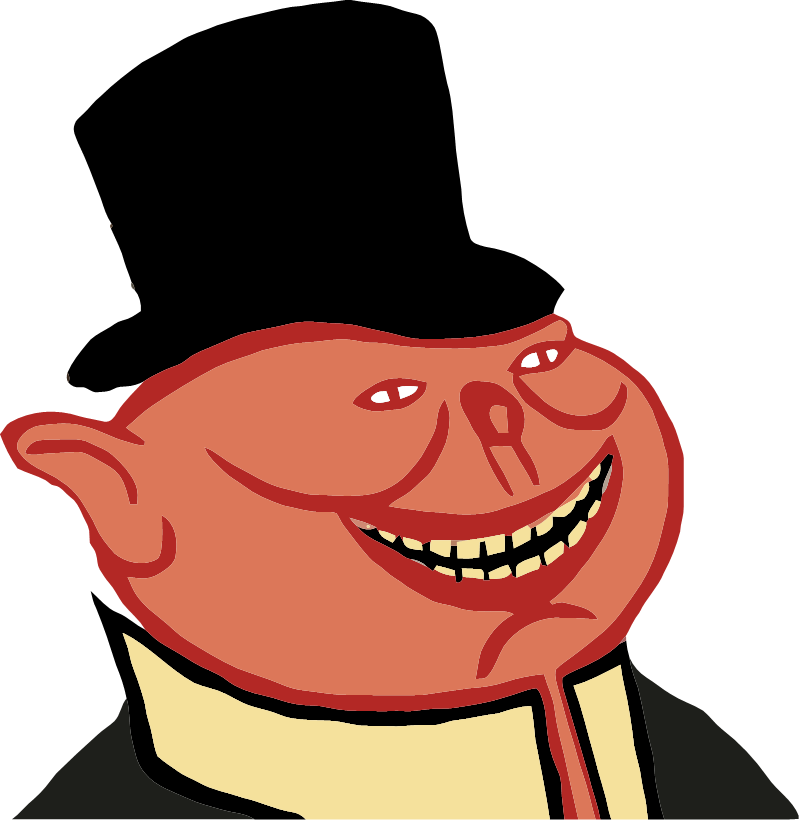
Money was a mistake
copyright is bad but absence of copyright is also not great. it should be replaced with a far more restricted version that only applies to art, with a massively shortened duration (10~15 years seem about right, from when you see it in your childhood to your mid 20s when you can start to produce meaningful works), with fair use baked in alongside new protections for non-commercial use and establishing faster and significantly cheaper mechanisms to settle disputes. the legislation should allow for evolution of culture and rapid dissemination of information while still retaining some rights for small artists.
will that work out? maybe but we haven't even tried, and it'll certainly be better than our public domain being frozen to basically 1930s while big media conglomerates merge and continue to hoard IPs, essentially holding our entire culture hostage. something has to give. unfortunately it's not a high priority issue and media lobby pockets are deep, so it's not gonna happen.
EDIT: of course the whole point of copyright is to protect the right holder's profits to provide "incentive" for people to create original works. outside of a capitalist system such system of ownership is just bad, although some measure to stop misattribution might be useful.
This isn't a complete idea, but it's a financial tool that is used to keep technology and ideas out of the hands of poor and often racialized peoples in the internal periphery, forcing them to pay a premium to access those technologies and ideas of the imperial core.
More like copywrong laws
Copyright and Private property kind of go hand in hand where they basically exist so someone can't "steal" your property and profit off of it themselves.
But it's been talked over a bunch and I don't wanna repeat the points that provide compelling and reasonable arguments for why it could/should be abolished. Or how should we abolish it.
I'm more interested in the identity aspect of it. Copyright law doesn't actually do anything to make sure your attribution to something you've put your work into stays. Capitalists love turning things into hobbies so you work for free in a precarious environment and they can keep stealing from you and copyright anything you made, that they see they can extract value from. They will copyright anything and everything their wallet allows them to and hold it all hostage.
There are two things I think are important: credit and resource allocation. So a socialist solution would be more restrictive and allow someone to take the benefit of their work. If a group makes a project then that's cool and good and they should get their flowers and people should generally be willing to give labor in exchange for it. You need a couple years to be like "yes, this is good, this is doing numbers for society. I've taken what I need to afford luxury, I've gotten my ELO gain. I will continue to monitor the open source space and move on to my next project."
The limitations inherent to a more socialist resource allocation is when someone else could take that work, make it 10% better, and revolutionize industry or take us to the moon in respect to scientific advancement, scalability of industry, or automation. Like if someone made 90% Haber-Bosch process. If you're in the later stages of communism and you could go "well, you're going to be compensated with luxuries for this," they don't have to go back to scrubbing the proverbial toilet, and they are assuredly part of the narrative even after someone makes that 10% improvement (e.g. I can't add the final 10% and call it the WDYMP Process) then I could see them being in the presence of justice as they are compelled to pass the torch without copyright protection.
But as I type this I realize I'm thinking a lot more about patents and inventions. If you published some kind of novel/entertainment product and someone started making a bunch of AI smut of your characters and you had no tool to tell them to piss off then it would be cringe. Beyond my wheel house because I would feel sad to see my characters be compelled into the public domain. But then again, my material conditions are like some Hasbro-Disney amalgam played by Chris Pratt completely missing the point and never having to ask my what my vision was - if I were in a less barbarous society people might do justice to my vision even if I don't control it with an iron fist
theyre fun to violate
The current system is nonsense, and allows the rich to control too much media (and thus culture). There are some movies or books that are hard to find "legitimate" copies of, because the "rights holders" don't want them out there, or a complicated confluence of "well the movie has music in it" or whatever.
The main thing I would like to see protected is for some nobody who makes a cool creative work to get credit. I don't want someone to make a cool cartoon, and then Disney just swoops in and makes their own movies and tv shows based on it while the creator is left in the dust. But I also don't want people to be able to hold onto an idea for decades, either.
I feel like anyone should be allowed to go make a Lord of the rings movie without needing permission. That shit is old now. It's just part of our culture.
Some sort of "you have exclusive rights for 3 years" plus "you must attribute previous works to their creators" might work for me.
I'm not a scholar I'm just shooting from the hip, but it was really annoying not being able to find a"legitimate" copy of spinal tap to stream recently.
Ironically, copyright sucks at defending the small guys. If a small nobody has their work copied by Disney, they definitely won't win a copyright infringement lawsuit due to how expensive and long it will be; in fact, it might even be bad PR for them because they could be perceived as "that one litigious person" or even a copyright troll.
Whereas under a copyright-free system or a much more lax copyright system, people would be more attentive and wouldn't assume that "if they didn't sue, it probably means Disney is in the right."
And as you noticed, current copyright is absurd: it applies to things that are no longer even being sold, and it's overly complex, so almost no one knows what counts as "copyright infringement" or not.
Funnily enough, current copyright has nothing to do with attribution. The judges and the legal system don't give a crap about it: in fact, you're making their job easier because you're admitting to copying and even providing the source.
Shouldnt exist.
The Cuddlefish Standard English way to spell that word is "CopyWRONG", so that may tell you something about how I feel about them.
I'll be controversial and say Copyright is fine but should be on a far shorter duration.
5 years is enough time to capitalise on your work as an inventor or artist.
Maybe protect art for sequels so nobody else is allowed to make a sequel. But is allowed to use the work or characters or whatever after the 5 years for original spinoffs.
Exception for medical inventions, this 5 years should only begin at time of fully entering the market. Because research and testing is such a long time period and it is not being capitalised during that time.
This assumes a market economy and assumes you could even achieve any of this, which you can't in any bourgeois country, so my position is fuck copyright entirely. But you could theoretically make it work in an ideal implementation provided that people actually had the power, but we don't.
IANAL, but to be pedantic, copyright mainly protects creative expression, not ideas, facts, systems, or methods of operation. So while someone can't copy your specific way of explaining a concept (the expression), they are generally free to use the underlying idea or information in their own work, as long as they don't replicate the original phrasing, structure, or other protectable elements.
By contrast, patents protect inventions; new and non-obvious processes, machines, manufactures, or compositions of matter. Where copyright arises automatically upon creation of a work, patents require a formal application and examination process. Patents offer stronger exclusivity (preventing others from even independently developing the same invention), but last much shorter (typically 20 years) compared to copyright, which lasts decades longer (often life of the author plus 70 years). In short: copyright covers how something is expressed; patents cover how something works or is invented.
So, you would also need to change the patent system to align with your proposal.
Yeah but I included invention since others are talking about it too. Same concepts anyway, protection of ideas, one for art one for physical.
The only good patent model I've seen is where a firm will employee an engineer and license their work from them for a time, but that individual inventor gets the benefits of their IP.
In my ideal world where copyright has to exist, it's solely for the benefit of the individual artists and is split between the production staff. Studios exist as talent incubators that license characters to fund a production where the profits mostly go to staff. I think it would be a good patronage model for all the creative and technical roles involved in a production, incentivising the people doing the work to make a better product and keeping control in their hands instead of an executive's. With enough small projects or one large one, a camera operator or soundtrack violinist could have the passive income to make whatever they want.
copyright ostensibly exists so writers and inventors and whatnot can make a living off their work
"making a living" stops being a thing once people's needs are just met as human rights, and there's no longer an excuse for copyright
Under capitalist society they have been turned to serve capitalists, and if we had a proper socialist society we would have no need for anything but credit to go to creators, but in the meantime if we were to build a dictatorship of the proletariat and enter the transitional phase of building communism I think the way forward on copyright would be a "worker first" rewrite of the whole system. Make it so that rights cannot be transfered to corporations, mandate reparations to copyright holders who were forced to sign away their rights under the old system, and establish a paradigm of shared ownership for the copyright of things produced by teams. Also shortening the term to reflect the speed that information moves in the digital era makes sense - something like five years is plenty.
Basically, I would want it rewritten with an explicitly class focused lens, to prevent the value of ideas from being extracted from those who produce them by the ruling class.