Finnish President wants to establish a new world order
StillNoLeftLeft [none/use name, she/her] - 2w
A president has "a take".
Would not expect anything less from this lord of neoliberalism. This guy personifies everything that is obnoxious about the bourgeoisie.
He is oh so civil,
has such dead eyes,
is oh so cultured,
but completely empty inside.
Parrots things passed into his brain by his bourgeoisie upbringing. He is like liberalism, the ideal.
27
Awoo [she/her] - 2w
The take is mostly fine. He regurgitates a marxist analysis of current global conditions but in liberal words and then says that the UN should be reformed to remove vetos and add more global south and asia countries.
The libshit parts about the west having values are obviously myth but what he actually proposes is beneficial to us.
2
StillNoLeftLeft [none/use name, she/her] - 2w
Yeah, but this guy is a true snake. He can sound relatively smart, but this is a proper ghoul.
5
Llituro [he/him, they/them] - 2w
if your president isn't or or , i'm not going to read their takes about building the new world order.
19
Crucible [he/him, comrade/them] - 2w
Western countries are all inching towards saying the 14 words openly at this point
18
HellieSkellie @lemmy.dbzer0.com - 2w
Is Finland considered western?
2
sexywheat [none/use name] - 2w
Yes.
5
FlakesBongler [they/them] - 2w
Doesn't Finland have like 20% unemployment right now?
10
BobDole [none/use name] - 2w
Officially 9.6%, but youth unemployment is 22.5%
14
FlakesBongler [they/them] - 2w
Seems like maybe they're not the best choice to come up with a new world order!
8
ComradeSharkfucker - 2w
Holy hell, did not know this damn
4
MF_COOM [he/him] - 2w
Hey me too. Our ideas are probably pretty different tho
10
PolandIsAStateOfMind @lemmygrad.ml - 2w
Oh no, we're finnished
9
darkcalling [comrade/them, she/her] - 2w
Don't care, you're part of the old world order. You had your chance. You blew it all on capitalism, end of history liberalism, and neoliberal brutality.
8
sawne128 [he/him] - 2w
You're all laughing now, but in five years you will all be eating makkarakeitto and saying hyvä.
8
CupcakeOfSpice [she/her, fae/faer] - 2w
The West's last chance is to abandon what has historically been considered "The West."
It is mostly a liberal reinterpretation of the current marxist analysis of the global situation, followed by his suggestions for preventing upcoming conflict. Several words and phrases simply swapped out to reframe things in a suitably liberal-sounding way. Then he twists things into an idealist analysis where possible.
He frames the world as a conflict currently occurring between multilateralists and multipolarists:
Multilateral cooperation is giving way to multipolar competition. Opportunistic transactions seem to matter more than defending international rules. Great-power competition is back, as the rivalry between China and the United States sets the frame of geopolitics. But it is not the only force shaping global order. Emerging middle powers, including Brazil, India, Mexico, Nigeria, Saudi Arabia, South Africa, and Turkey, have become game-changers. Together, they have the economic means and geopolitical heft to tilt the global order toward stability or greater turmoil. They also have a reason to demand change: the post–World War II multilateral system did not adapt to adequately reflect their position in the world and afford them the role that they deserve. A triangular contest among what I call the global West, the global East, and the global South is taking shape. In choosing either to strengthen the multilateral system or seek multipolarity, the global South will decide whether geopolitics in the next era leans toward cooperation, fragmentation, or domination.
Admits that the rules-based order is failing:
International institutions and norms provide the framework for global cooperation. They need to be updated and reformed to better reflect the growing economic and political power of the global South and the global East. Western leaders have long talked about the urgency of fixing multilateral institutions such as the United Nations. Now, we must get it done, starting with rebalancing the power within the UN and other international bodies such as the World Trade Organization, the International Monetary Fund, and the World Bank. Without such changes, the multilateral system as it exists will crumble. That system is not perfect; it has inherent flaws and can never exactly reflect the world around it. But the alternatives are much worse: spheres of influence, chaos, and disorder.
Claims multilateralism means order whereas multipolarism means disorder:
The international order, however, has not disappeared. Amid the wreckage, it is shifting from multilateralism to multipolarity. Multilateralism is a system of global cooperation that rests on international institutions and common rules. Its key principles apply equally to all countries, irrespective of size. Multipolarity, by contrast, is an oligopoly of power. The structure of a multipolar world rests on several, often competing poles. Dealmaking and agreements among a limited number of players form the structure of such an order, invariably weakening common rules and institutions. Multipolarity can lead to ad hoc and opportunistic behavior and a fluid array of alliances based on states’ real-time self-interest. A multipolar world risks leaving small and medium-sized countries out—bigger powers make deals over their heads. Whereas multilateralism leads to order, multipolarity tends toward disorder and conflict.
Splits the world into three regions of power, global west, global east, and global south:
Three broad regions now make up the global balance of power: the global West, the global East, and the global South. The global West comprises roughly 50 countries and has traditionally been led by the United States. Its members include primarily democratic, market-oriented states in Europe and North America and their far-flung allies Australia, Japan, New Zealand, and South Korea. These countries have typically aimed to uphold a rules-based multilateral order, even if they disagree on how best to preserve, reform, or reinvent it.
The global East consists of roughly 25 states led by China. It includes a network of aligned states—notably Iran, North Korea, and Russia—that seek to revise or supplant the existing rules-based international order. These countries are bound by a common interest, namely, the desire to reduce the power of the global West.
This is all marxist analysis reframed for liberal language. He is simply describing the factions of imperialism and anti-imperialism that have formed in the world today, with the global south as an unaligned emerging wildcard that will pick one side or the other:
The global South, comprising many of the world’s developing and middle-income states from Africa, Latin America, South Asia, and Southeast Asia (and the majority of the world’s population) spans roughly 125 states. Many of them suffered under Western colonialism and then again as theaters for the proxy wars of the Cold War era. The global South includes many middle powers or “swing states,” notably Brazil, India, Indonesia, Kenya, Mexico, Nigeria, Saudi Arabia, and South Africa. Demographic trends, economic development, and the extraction and export of natural resources drive the ascendance of these states.
The global West and the global East are fighting for the hearts and minds of the global South. The reason is simple: they understand that the global South will decide the direction of the new world order. As the West and the East pull in different directions, the South has the swing vote.
Acknowledges that the west doesn't actually offer the global south anything (but also claims that buying them won't work?)
The global West cannot simply attract the global South by extolling the virtues of freedom and democracy; it also needs to fund development projects, make investments in economic growth, and, most important, give the South a seat at the table and share power. The global East would be equally mistaken to think that its spending on big infrastructure projects and direct investment buys it full influence in the global South. Love cannot be easily bought. As Indian Foreign Minister Subrahmanyam Jaishankar has noted, India and other countries in the global South are not simply sitting on the fence but rather standing on their own ground.
He then goes on to claims the west needs "values-based realism" to forge partnerships in the global south. Which is basically just the claim the west are good people with values which is totally contradictory after supporting Israel but w/e. He is basically suggesting the west needs to do power sharing and actually offer something to the global south but also to not give up the "values" shit (what america is doing) or else the myth the west is built upon will collapse. He argues that the west can not rely on dominating the global south, it will not work. I'll not quote any of this because it's absolutely bullshit.
Calls for the UN to be reformed.
In order to ensure that chaos doesn't occur due to 3 power groups competing with no mediation, he basically thinks that a rebalancing of power is needed and that starts with the UN:
Reform begins at the top, namely, in the United Nations. Reform is always a long and complicated process, but there are at least three possible changes that would automatically strengthen the UN and give agency to those states that feel that they don’t have enough power in New York, Geneva, Vienna, or Nairobi.
First, all major continents need to be represented in the UN Security Council, at all times. It is simply unacceptable that there is no permanent representation from Africa and Latin America in the Security Council and that China alone represents Asia. The number of permanent members should be increased by at least five: two from Africa, two from Asia, and one from Latin America.
Second, no single state should have veto power in the Security Council. The veto was necessary in the aftermath of World War II, but in today’s world it has incapacitated the Security Council. The UN agencies in Geneva work well precisely because no single member can prevent them from doing so.
Third, if a permanent or rotating member of the Security Council violates the UN Charter, its membership in the UN should be suspended. This would mean that the body would have suspended Russia after its full-scale invasion of Ukraine. Such a suspension decision could be taken in the General Assembly. There should be no room for double standards in the United Nations.
Putting aside the Ukraine nonsense.. These are actually good suggestions? I don't know what mechanisms exist to achieve this though. Would any of this hurt marxists? Do we prefer to avoid the conflicts that multipolarity will bring about or does this pose a framework that would benefit us? Would a stronger UN without veto help international communist movements or hinder them?
He then goes on to also suggest global financial organisations need to be reformed but is mostly vague about them except for the WTO:
Global trade and financial institutions also need to be updated. The World Trade Organization, which has been crippled for years by the paralysis of its dispute settlement mechanism, is still essential. Despite an increase in free trade agreements outside the WTO’s purview, over 70 percent of global trade is still conducted under the WTO’s “most favored nation” principle. The point of the multilateral trading system is to ensure the fair and equitable treatment of all its members. Tariffs and other infringements of WTO rules end up hurting everyone. The current reform process must lead to greater transparency, especially with respect to subsidies, and flexibility in the WTO decision-making processes. And these reforms must be enacted swiftly; the system will lose credibility if the WTO remains mired in its current impasse
6
Awoo [she/her] - 2w
[secondpost] And I've hit the character limit. That's ok though, the rest of the essay is just a waffling conclusion about mythical values the west holds so I was gonna skip it anyway.
My question is ultimately whether his suggestions would benefit us or not. Would revolutions be able to occur with less imperialist intervention? Or if the US would be prevented from doing it as it has done so since the end of ww2 would the UN instead become the new vessel of imperialist intervention preventing countries from socialist revolution?
I don't know the answer. I do lean towards the idea that a stronger UN like this would restrain the US which is why I am skeptical you could ever get the US to support it. But perhaps the US could be convinced that the sacrifice is necessary to also restrain their enemies if they fear they might actually lose to China et al? I think I lean towards this idea being beneficial rather than harmful to international socialists? My area of uncertainty is in what the UN under these circumstances would do when socialist revolution threatens a country. Whether they would deploy "peacekeepers" that ultimately prevent it or stabilise a collapsing capitalist state, etc.
EDIT: Strongly recommend reading the news mega post. There were other good replies and discussion.
Analyze Finland's position, in what they see as an Emerging world power. It makes sense what they are saying given the context. Speaking and economics is the only thing they can do, the only thing Europe has is a Cartel they call EU.
These 27 countries, who still want to pretend to be autonomous themselves, can't even get together under 1 unified language. There's even a rockstar "Communist" running around, to suck up the left.
jackmaoist in slop
Finnish President wants to establish a new world order
A president has "a take".
Would not expect anything less from this lord of neoliberalism. This guy personifies everything that is obnoxious about the bourgeoisie.
He is oh so civil,
has such dead eyes,
is oh so cultured,
but completely empty inside.
Parrots things passed into his brain by his bourgeoisie upbringing. He is like liberalism, the ideal.
The take is mostly fine. He regurgitates a marxist analysis of current global conditions but in liberal words and then says that the UN should be reformed to remove vetos and add more global south and asia countries.
The libshit parts about the west having values are obviously myth but what he actually proposes is beneficial to us.
Yeah, but this guy is a true snake. He can sound relatively smart, but this is a proper ghoul.
if your president isn't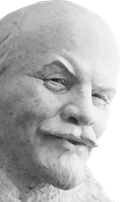 or
or 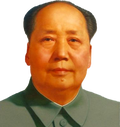 or
or 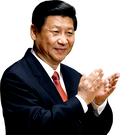 , i'm not going to read their takes about building the new world order.
Western countries are all inching towards saying the 14 words openly at this point
Is Finland considered western?
Yes.
Doesn't Finland have like 20% unemployment right now?
Officially 9.6%, but youth unemployment is 22.5%
Seems like maybe they're not the best choice to come up with a new world order!
Holy hell, did not know this damn
Hey me too. Our ideas are probably pretty different tho
Oh no, we're finnished
Don't care, you're part of the old world order. You had your chance. You blew it all on capitalism, end of history liberalism, and neoliberal brutality.
You're all laughing now, but in five years you will all be eating makkarakeitto and saying hyvä.
The West's last chance is to abandon what has historically been considered "The West."
Guess I'll repost what I posted in the news mega for this.
It is mostly a liberal reinterpretation of the current marxist analysis of the global situation, followed by his suggestions for preventing upcoming conflict. Several words and phrases simply swapped out to reframe things in a suitably liberal-sounding way. Then he twists things into an idealist analysis where possible.
He frames the world as a conflict currently occurring between multilateralists and multipolarists:
Admits that the rules-based order is failing:
Claims multilateralism means order whereas multipolarism means disorder:
Splits the world into three regions of power, global west, global east, and global south:
This is all marxist analysis reframed for liberal language. He is simply describing the factions of imperialism and anti-imperialism that have formed in the world today, with the global south as an unaligned emerging wildcard that will pick one side or the other:
Acknowledges that the west doesn't actually offer the global south anything (but also claims that buying them won't work?)
He then goes on to claims the west needs "values-based realism" to forge partnerships in the global south. Which is basically just the claim the west are good people with values which is totally contradictory after supporting Israel but w/e. He is basically suggesting the west needs to do power sharing and actually offer something to the global south but also to not give up the "values" shit (what america is doing) or else the myth the west is built upon will collapse. He argues that the west can not rely on dominating the global south, it will not work. I'll not quote any of this because it's absolutely bullshit.
In order to ensure that chaos doesn't occur due to 3 power groups competing with no mediation, he basically thinks that a rebalancing of power is needed and that starts with the UN:
Putting aside the Ukraine nonsense.. These are actually good suggestions? I don't know what mechanisms exist to achieve this though. Would any of this hurt marxists? Do we prefer to avoid the conflicts that multipolarity will bring about or does this pose a framework that would benefit us? Would a stronger UN without veto help international communist movements or hinder them?
He then goes on to also suggest global financial organisations need to be reformed but is mostly vague about them except for the WTO:
[secondpost] And I've hit the character limit. That's ok though, the rest of the essay is just a waffling conclusion about mythical values the west holds so I was gonna skip it anyway.
My question is ultimately whether his suggestions would benefit us or not. Would revolutions be able to occur with less imperialist intervention? Or if the US would be prevented from doing it as it has done so since the end of ww2 would the UN instead become the new vessel of imperialist intervention preventing countries from socialist revolution?
I don't know the answer. I do lean towards the idea that a stronger UN like this would restrain the US which is why I am skeptical you could ever get the US to support it. But perhaps the US could be convinced that the sacrifice is necessary to also restrain their enemies if they fear they might actually lose to China et al? I think I lean towards this idea being beneficial rather than harmful to international socialists? My area of uncertainty is in what the UN under these circumstances would do when socialist revolution threatens a country. Whether they would deploy "peacekeepers" that ultimately prevent it or stabilise a collapsing capitalist state, etc.
EDIT: Strongly recommend reading the news mega post. There were other good replies and discussion.
https://hexbear.net/comment/6720293
Analyze Finland's position, in what they see as an Emerging world power. It makes sense what they are saying given the context. Speaking and economics is the only thing they can do, the only thing Europe has is a Cartel they call EU.
These 27 countries, who still want to pretend to be autonomous themselves, can't even get together under 1 unified language. There's even a rockstar "Communist" running around, to suck up the left.